Having lived in Germany for the past 12 years, I’ve experienced life here through many phases—starting out as a student on a tight budget and gradually learning the ins and outs of everyday life. Back then, every euro mattered, and finding a supermarket that struck the right balance between affordability and nutrition was a must.
Over the years, I’ve shopped at nearly every major supermarket—Aldi, Lidl, Wasgau, Rewe, Kaufland, Netto, and probably a few others I’ve forgotten along the way. Through trial, error, and plenty of weekly grocery runs, I’ve developed a strong sense of where to go for what, especially when saving money is a priority.
I know how overwhelming it can be, especially for Indian students or newcomers to Germany, to figure out which supermarket is right for their needs. So, I’ve put together this research to help you navigate the supermarket landscape here. Whether you’re trying to manage your budget or just want to know where you can find the best value for your money, this guide is for you.
Let’s take a look at some of the most popular supermarket chains in Germany—ranked from the most budget-friendly to the more premium options—along with a few practical insights into what you can expect at each.
1. Aldi
Aldi is renowned for its low prices and efficient shopping experience.
- Pricing Strategy: Aldi focuses on private-label products, reducing costs associated with national brands.
- Store Design: The minimalist store layout and limited product range streamline operations and reduce overhead.
- Consistency: Aldi maintains uniform pricing across its stores, ensuring predictable costs for shoppers.
2. Lidl
Lidl offers competitive prices, similar to Aldi, with a slightly broader product range.
- Product Selection: While emphasizing private labels, Lidl also includes more branded products.
- Weekly Specials: Regular promotions and special offers attract a diverse customer base.
- Store Environment: Lidl stores are designed for quick and efficient shopping experiences.
3. Netto Marken-Discount
Netto positions itself between discounters and traditional supermarkets, offering a wide selection at reasonable prices.
- Regional Products: Emphasis on locally sourced items enhances product diversity.
- Private Labels: A broad range of private-label products caters to budget-conscious shoppers.
- Store Network: With an extensive network, Netto is accessible in many regions.
4. Edeka
Edeka is a traditional supermarket chain offering a vast selection of products, including premium and specialty items.
- Product Variety: Extensive range of national and international brands.
- Fresh Produce: Focus on fresh and organic products appeals to quality-conscious consumers.
- Service: Enhanced customer service and in-store amenities contribute to a premium shopping experience.
5. Wasgau
Wasgau is a regional supermarket chain emphasizing quality and local products.
- Local Focus: Strong emphasis on regional and fresh products.
- Store Size: Smaller store network and sizes may lead to higher prices due to reduced economies of scale.
- Customer Experience: Personalized service and community engagement enhance the shopping experience.
Conclusion
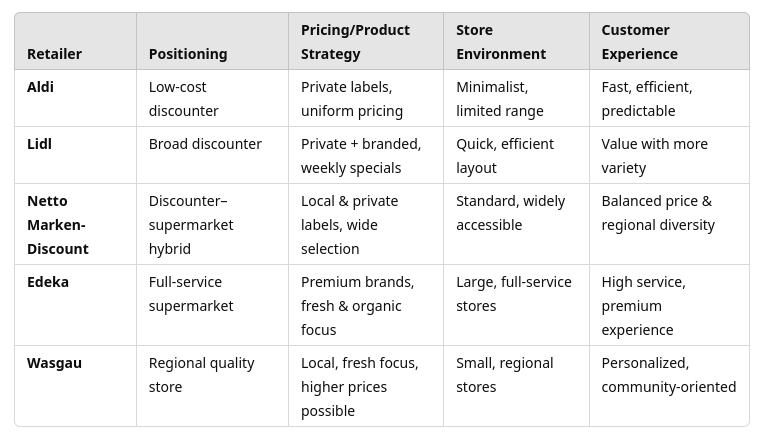
For budget-friendly shopping, Aldi and Lidl offer consistent low prices, especially on staple items. Netto Marken-Discount provides a balance between price and variety, with a focus on regional products. Edeka and Wasgau cater to those seeking a broader selection and premium products, albeit at higher prices.
Understanding these distinctions can help you choose the supermarket that best aligns with your shopping preferences and budget.
 Indian Girl in Germany